
Key Takeaways
The type of business card you choose communicates your brand identity, level of professionalism, and attention to detail at first glance, shaping how your business is perceived before any interaction.
- The type of business card you choose directly influences first impressions and how long your brand is remembered.
- Standard business cards offer familiarity and practicality, while specialty formats prioritize visual impact and memorability.
- Paper stock, thickness, and finish affect durability, feel, and perceived quality just as much as design.
- Slim, square, folded, and die cut cards require more intentional layouts to stay clear and readable.
- Plastic, magnetic, and metal cards last longer and work best when long term visibility matters more than quantity.
- The best business card aligns with your industry, budget, and how you plan to distribute it, not just how it looks.
First impressions happen fast. When you hand someone your business card, whether at a conference, trade show, coffee shop, or networking event, you have about three seconds to communicate who you are and why they should remember you.
What can help? A well designed business card!
The types of business cards you choose, from the shape and size to the paper and finish, directly affect that split-second impression.
A flimsy, generic card says something very different than a thick, textured square card with bold brand colors.
This guide walks you through every major card type, from standard to square. You’ll learn which formats work best for specific industries, how paper stocks affect durability and feel, and how to match your card choice to your brand personality and budget.
By the end, you’ll know exactly which business card options make sense for your situation and which ones to skip.
Standard Business Cards
Standard business cards remain the most common format for professional networking in the USA and globally. There’s a reason they’ve been the default choice for decades: they work.
The typical US business card measures 2” x 3.5” (approximately 51 mm x 89 mm). This size fits easily into most wallets, card holders, and badge sleeves.
When someone receives your card, they know exactly where to put it without folding or cramming.
Common Paper Thicknesses:
- 14 pt cardstock: A great option that’s budget-friendly and suitable for high quantity orders.
- 16 pt cardstock: Sturdier, more premium choice that resists bending better.
- 18 pt+ cardstock: Ultra premium feel that approximates the weight of a credit card.
- 32 pt cardstock: Thick option that delivers a true luxury feel with maximum durability and weight.
Usual Finishes:
- Matte: Low sheen, professional appearance, easy to write on with a pen.
- Gloss: Shiny surface that makes colors pop, ideal for color printing and photography.
- Uncoated: Natural texture for handwritten notes, preferred by artisanal brands.
Typical Layout Elements:
- Logo prominently placed
- Name and title clearly visible
- Phone number and email
- Website URL
- Optional QR code linking to portfolio or contact details
Best For: Corporate professionals, legal services, finance, consulting, B2B services, and any industry where a conservative, reliable impression matters more than standing out visually.
Mini & Slim Business Cards
Mini or slim business cards are narrower than standard cards and designed to be sleek, modern conversation starters. They signal that you’re not afraid to do things a little differently.
Common Dimensions:
- Slim cards typically measure 1.75” x 3.5” (compared to the standard 2” x 3.5”)
- Some print providers offer 1.5” x 3.5” as an even narrower option
Key Characteristics:
- Easy to carry in large quantities and ideal for trade shows and conferences
- Feels more compact and lightweight in the hand
- Same contact details can be included, but the design must be more minimal
- Forces you to prioritize essential information only
Design Considerations:
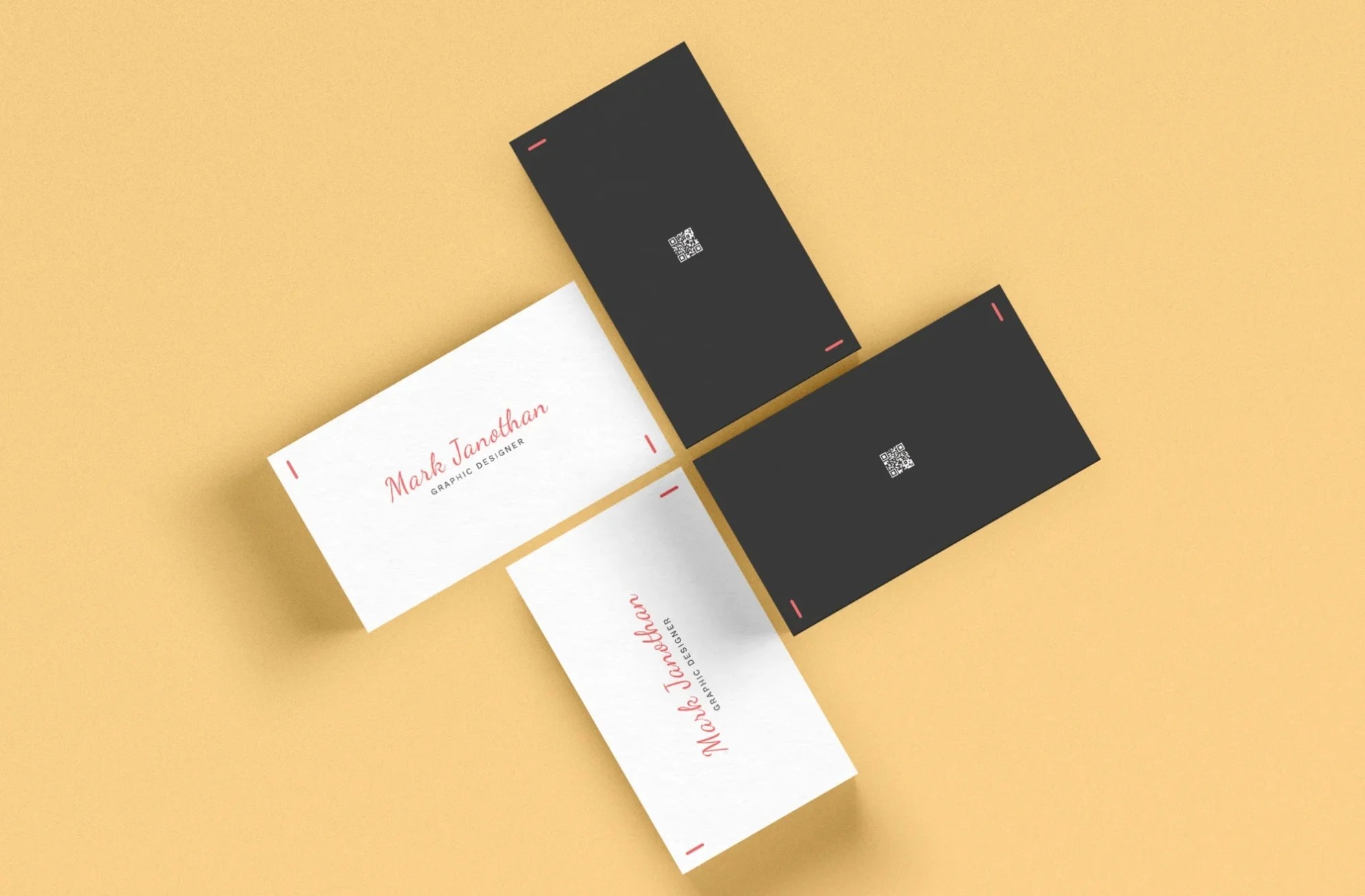
- Vertical orientation often works better than horizontal for slim formats
- Reduce text elements to name, title, one contact method, and website
- Use negative space intentionally. Crowded slim cards look cluttered fast
Best For: Creative professionals, health and fitness coaches, real estate, salons, lifestyle brands, photographers, consulting, and anyone who wants a less formal feel while still handing out professional business cards.
Square Business Cards
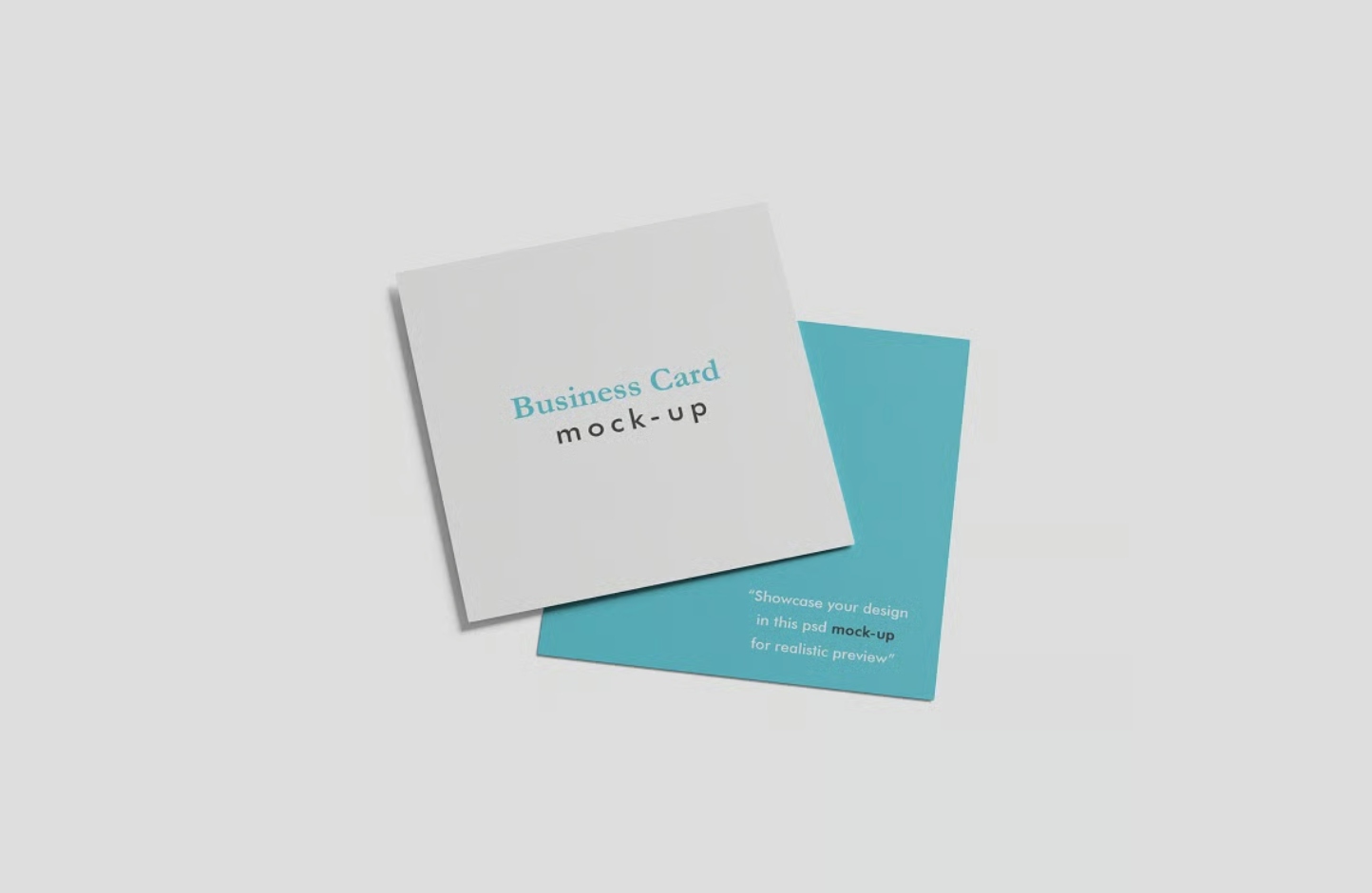
Square business cards are a modern, attention grabbing alternative to traditional rectangles. When someone flips through a stack of cards after an event, yours literally stands out.
Common Dimensions:
- Most square cards measure 2.5” x 2.5” (approximately 64 mm x 64 mm)
- Some providers offer custom square business cards in 2” x 2” for a more compact option
Visual Advantages:
- The square shape naturally draws the eye in a pile of rectangles
- Works exceptionally well for bold logos, photography, and symmetrical designs
- Provides a balanced canvas for minimal typography centric layouts
Best For: Designers, photographers, boutique shops, modern tech startups, creative agencies, and brands wanting a trendy aesthetic that commands attention.
Folded & Multi-Panel Business Cards
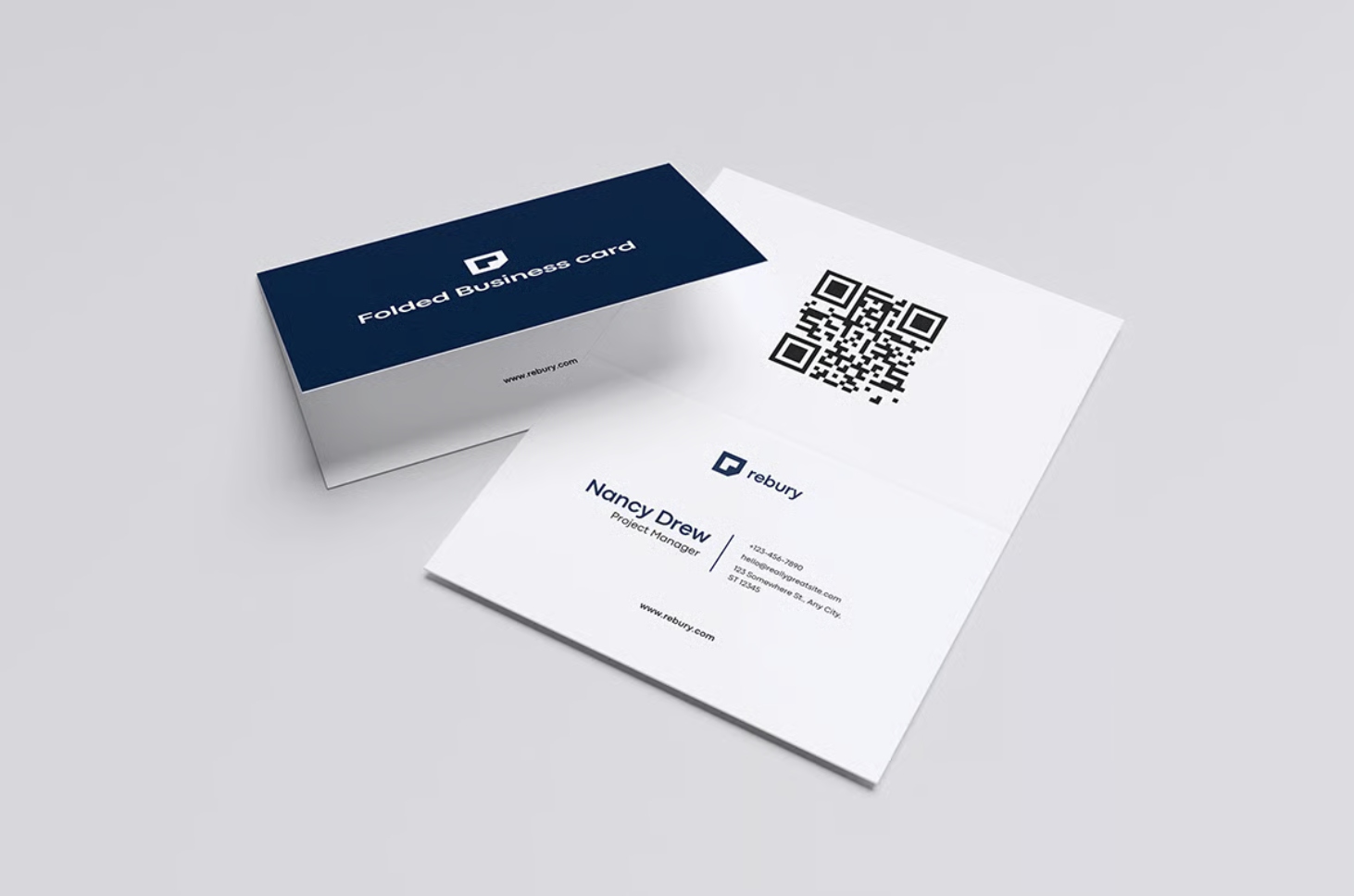
Folded business cards (also called “fold-over” cards) double your printable area while maintaining a standard card footprint when closed. Think of them as mini brochures that still fit in a wallet.
Dimensions and Structure:
- Common size: 4” x 3.5” flat, scoring and folding down to 2” x 3.5”
- Creates four printable panels for content
- Opens like a book, greeting card, or tent, depending on fold orientation
Typical Uses:
- Listing multiple services or product categories
- Including a mini appointment schedule or availability
- Adding loyalty stamps or punch card functionality
- Providing small maps, directions, or location details
- Featuring QR codes inside that link to expanded content
Design Considerations:
- Keep the front panel clean and brand focused, this is what people see first
- Place detailed information, offers, or schedules on inside panels
- Use the back panel for website URL or secondary contact details
- Ensure the fold doesn’t cut through critical text or images
Best For: Salons, spas, dental and medical offices, restaurants, service providers who need extra information space, and businesses offering loyalty cards or appointment tracking.
Plastic Business Cards
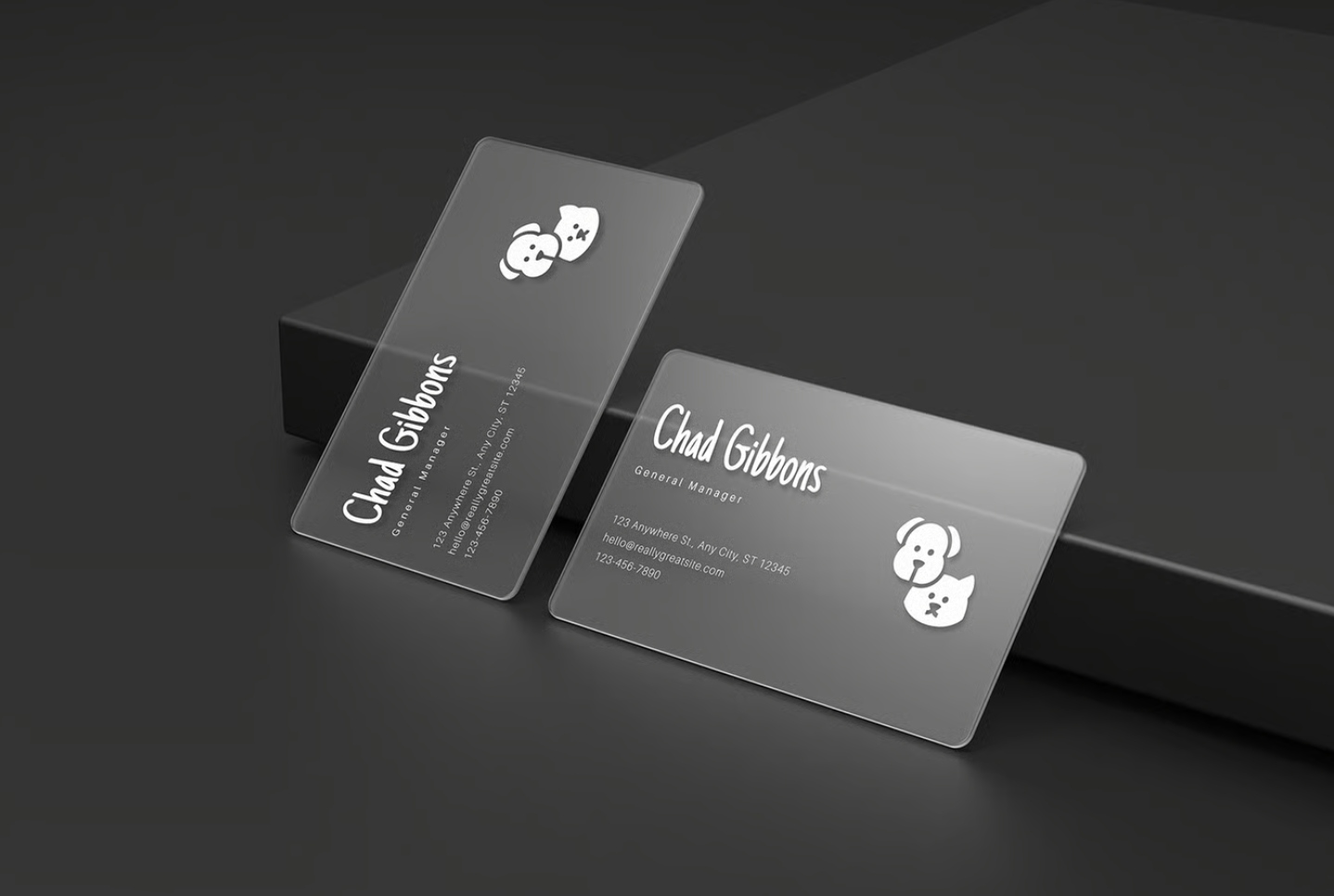
Plastic business cards offer a modern alternative to paper, typically made from durable PVC or similar materials.
Options such as clear or frosted plastic create a clean, professional look that stands out while maintaining a smooth, premium feel.
These cards are highly durable and water resistant, making them ideal for frequent handling and long term use. Their sturdiness and weight often signal quality and professionalism, helping brands leave a strong impression.
Plastic business cards are commonly used for membership cards, loyalty programs, and service based businesses where longevity matters.
Because they last longer than paper cards, they are more likely to be kept and reused.
Magnetic Business Cards
Magnetic business cards feature a flexible magnetic backing that allows them to stick to metal surfaces such as refrigerators or filing cabinets, keeping your business visible over time.
They are commonly used by service based businesses and local brands, including home services and repair professionals, where easy access to contact details matters.
Designs should stay simple and readable. Focus on your business name, core service, and contact information so the card is clear at a glance.
Compared to paper cards, magnetic business cards last longer and are less likely to be discarded, helping maintain ongoing brand visibility.
Die Cut & Specialty Shape Business Cards
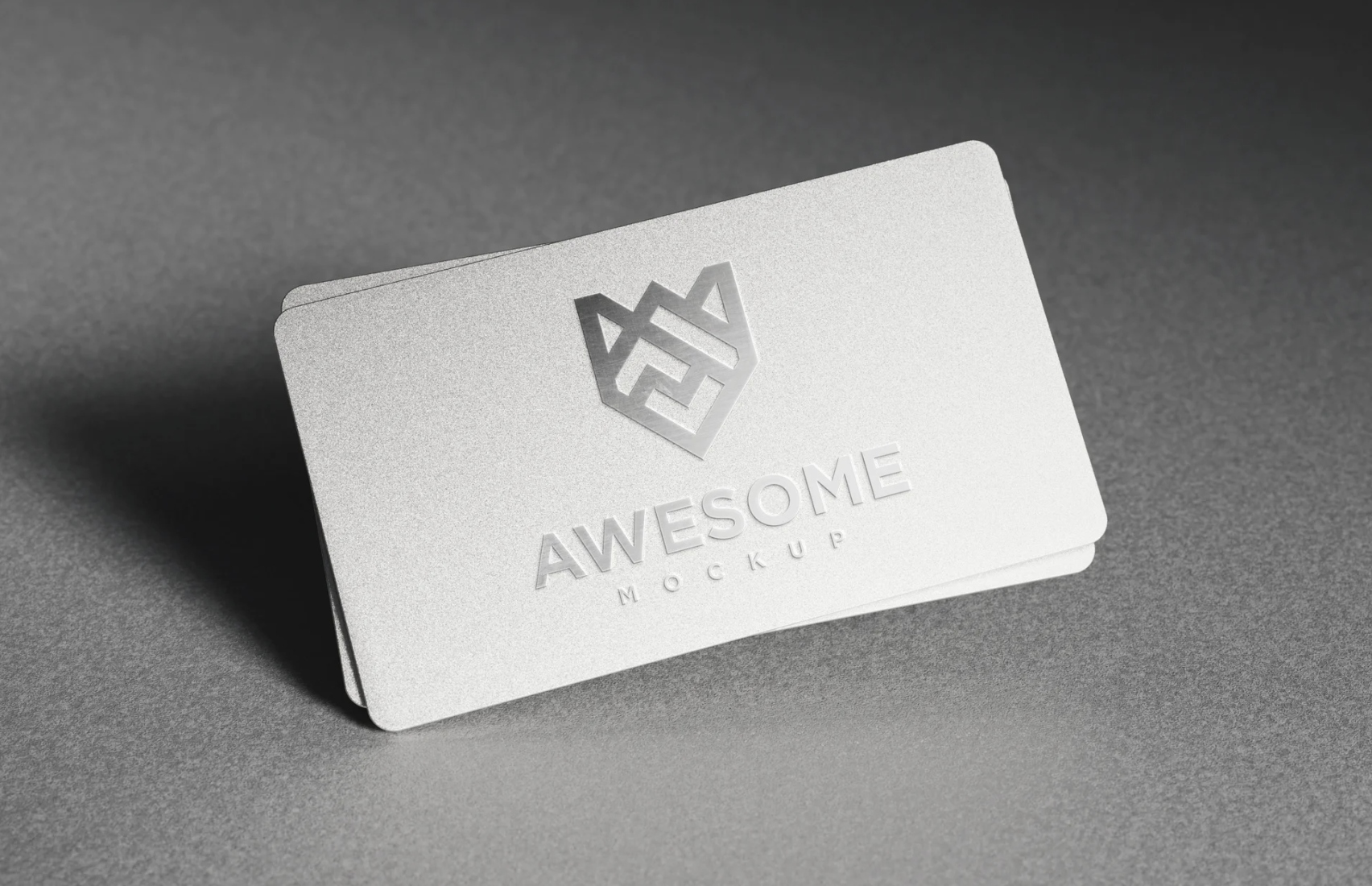
Die cut business cards are trimmed into custom shapes beyond traditional rectangles and squares. Using metal dies or digital cutting technology, printers can create virtually any outline you can imagine.
Shape Examples:
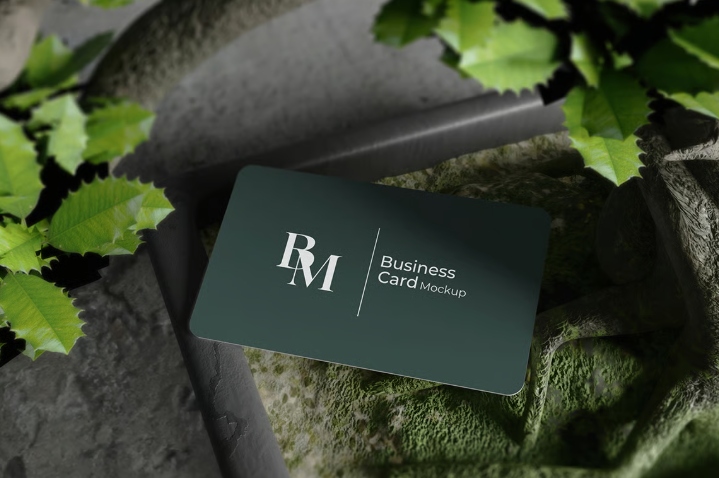
- Rounded corners (subtle but effective and softens the overall feel)
- Perfect circles for photography or logo centric designs
- Leaf shapes for landscaping, eco brands, or wellness businesses
- Bottle outlines for beverage brands or distilleries
- House silhouettes for real estate agents
- Gear shapes for mechanics or engineering firms
- Custom logo outlines that match your brand symbol exactly
Why Choose Die Cut:
- Reinforces brand identity by mirroring your logo, product, or industry symbol
- Creates immediate memorability, and people remember unusual shapes
- Signals creativity and attention to detail before you say a word
- Makes a lasting impression at luxury meetings and VIP events
Practical Notes:
- Specialty shapes typically cost more per card than standard prints
- Production time may run slightly longer due to custom cutting
- Small text near edges can get trimmed. Keep critical information in safe zones
- Best when memorability outweighs mass distribution needs
Best For: Boutique brands, luxury products, event planners, creative industries, and any business where standing out matters more than handing out hundreds of cards at once.
Helpful Design Tips by Card Type
Matching design choices to your card format ensures your information communicates clearly and your brand shines through.
- Standard Cards: Prioritize legibility, white space, and hierarchy of information. Name and role should be most visible. Use double sided business cards to separate contact details from branding elements. Keep your own logo clean and recognizable.
- Mini/Slim Cards: Recommend minimalist layouts with short names for services. Consider vertical orientation to emphasize slimness. Every element must earn its place, ruthlessly edit.
- Square Cards: Suggest centered logos, symmetrical layouts, and bold color blocks that leverage the balanced square shape. The equal dimensions invite a centered, formal composition.
- Folded Cards: Front panel for branding, inner panels for details, offers, or schedules, and back panel for website or QR code. Treat it like a story with a clear beginning, middle, and end.
- Die-Cut Cards: Keep critical information away from intricate cutouts and edges. Small text near custom edges risks getting trimmed. Ensure the shape directly ties to your brand story, gimmicks without purpose fall flat.
How to Choose the Right Type of Business Card
Your choice depends on brand personality, budget, and how and where you’ll distribute cards. Here’s how to think through the decision:
- Align card type with industry: Conservative fields (law, finance, consulting) often favor standard matte cards. Creative fields (design, photography, entertainment) may lean toward square, slim, or die cut options. Match expectations while adding your own style.
- Consider your budget: Standard 14 pt or 16 pt cards in more quantities are most economical. Die-cut shapes, thick specialty stocks, and special finishes command premium pricing. Order in larger quantity to reduce per card cost.
- Think about practicality: Standard 2” x 3.5” cards fit most wallets perfectly. Square cards (2.5” x 2.5”) may not slide neatly into every wallet slot. Consider how recipients will store your card and whether they’ll revisit it later.
- Evaluate your networking style: Handing out 50 cards at a conference? Standard cards in higher quantities make sense. Meeting three VIP clients per month? Premium thick stock with painted edges creates the right impression.
- Test before committing: Order small test runs or mixed types before placing large orders. Many professionals use standard cards for mass events and specialty cards for VIP meetings. You can easily customize your approach based on the situation.
- Check shipping times and production time: Premium options often require longer lead times. Plan accordingly for important events.
Final Thought
Choosing the right business card is about matching format, material, and finish to how you actually network.
Whether you need something practical for high volume events or a premium option for key introductions, the right card supports your brand and makes your contact details easy to keep.
When your card fits your goals, industry, and budget, it does its job long after the handshake ends.