
Key Takeaways
A retractable banner is a portable display that combines a printed graphic with a stand designed to set up and pack away in minutes.
- The graphic retracts into the base. A spring mechanism pulls the printed graphic into a compact housing for easy transport and storage.
- Setup takes less than a minute. Pull the graphic up, extend the support pole, and the banner stands on its own.
- Sizes vary, but most fall in a similar range. Standard widths run from about 24 to 48 inches, with heights typically around 78 to 96 inches.
- They show up everywhere. Trade shows, retail entrances, conferences, open houses, and lobbies all rely on retractable banners for quick, professional signage.
- Quality depends on more than the graphic. The stand, the material, and the print quality all affect how long a banner holds up and how good it looks.
If you've been to a trade show, walked into a conference, or attended an open house, you've seen a retractable banner.
They're the tall, freestanding displays that pop up next to a registration table or by an entrance, usually with a logo, a message, and some kind of call to action.
They've become a go-to option for a reason. They're portable, they set up fast, and they make a space feel put together without much effort.
Plenty of people use the term without really knowing how the thing works or what makes it different from other banner types.
This blog covers what a retractable banner is, how the stand works, common sizes, where they get used, and what to look for if you're deciding whether one is right for you and your business.
What Is a Retractable Banner?
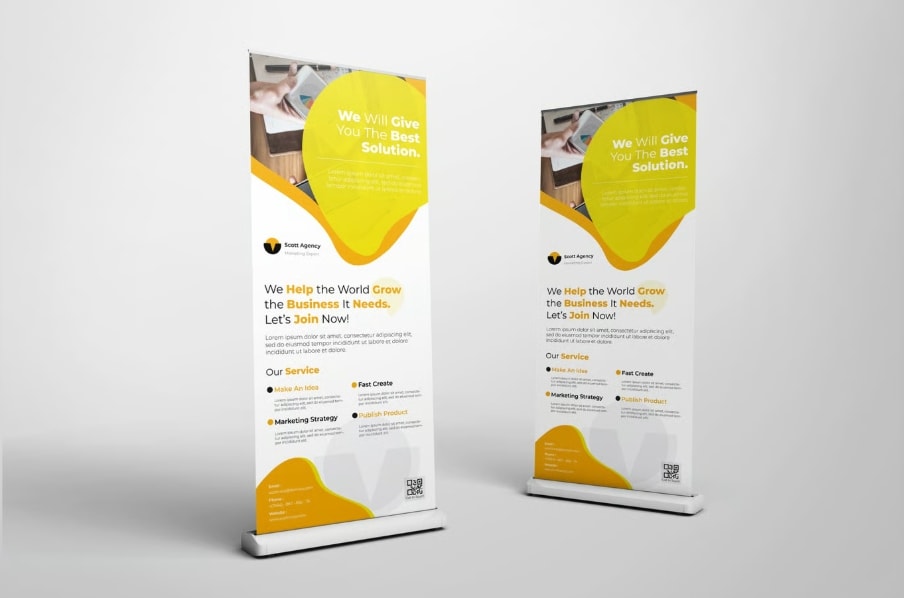
A retractable banner is a printed graphic attached to a stand, built so the graphic rolls up into a base when it's not in use.
Stand and graphic work as one unit. That's the main thing setting it apart from a static banner or poster, which needs a separate frame or mounting solution.
The name comes from the retracting mechanism. Pull the support pole down when you're done, and the graphic rolls back into the base on its own. What you're left with is a single compact case, easy to carry and easy to store.
Most stands weigh somewhere between 8 and 15 pounds, light enough to carry in one hand but sturdy enough to keep the banner upright.
How are they different from other visuals? A vinyl banner is just printed material with no stand. A poster needs a frame or easel. A retractable banner brings the whole display together in one piece.
If you're weighing a retractable against other formats, the different types of banner advertising is a good place to see how they all compare.
How Do Retractable Banner Stands Work?
The mechanics are simple, and that simplicity is a big part of why retractable banners are used by numerous businesses.
Inside the base sits a spring-loaded roller. The printed graphic attaches to the roller on one end and a support bar on the other. Packed away, spring tension keeps the graphic rolled tightly inside the base.
To set it up, pull the top edge of the graphic upward, unrolling it from the base against the spring tension. A telescoping pole extends from the back of the base and locks into place, attaching to the top of the graphic and holding it taut.
Packing it away reverses the process. Unlock the pole, collapse it down, and the spring pulls the graphic back into the base. Either direction takes less than a minute, which matters a lot for anyone setting up and tearing down on a regular basis.
A trade show exhibitor can pull into a booth, have the banner up before the table is even set, and break it all back down at the end of the day without needing a single tool.
Common Sizes and Formats
Retractable banners come in a range of sizes, though most fall within a fairly standard set of dimensions. The good news is there's likely a size that fits exactly what you need, whether that's a compact tabletop version or a wide format built to command attention.
Dimensions
Width typically runs from about 24 inches up to 48 inches. Thirty three inches is one of the most common widths for a single sided stand. Height generally falls between 78 and 96 inches, putting the graphic at roughly eye level or slightly above for most adults.
Wider formats exist for larger displays, sometimes reaching 60 inches or more, but they need a sturdier base and lose some of the portability. Smaller tabletop versions exist too, useful when floor space is tight, like at a registration desk.
Think about where the banner will live and how much visual presence the space calls for. A single banner near an entrance might call for a standard size.
A trade show booth might do better with a wider format or a few banners working together, alongside other trade show printing materials.
Common Uses
The portability and quick setup make retractable banners useful across a range of settings.
Trade Shows
The most popular setting by far. Booths often lean on one or more retractable banners for branding or product information without eating up floor space the way a larger structure would.
Retail Entrances
Used to highlight promotions, new arrivals, or seasonal messaging. Since they're easy to swap out, a business can update its messaging without committing to a permanent sign.
Conferences and Events
Relied on for directional signage, sponsor recognition, and branding near registration areas or stages.
Real Estate Open Houses
Often placed near the entrance to welcome visitors and reinforce branding, especially useful for agents covering multiple open houses who need something they can move easily between locations. It's one of several real estate marketing materials worth having on hand.
Lobbies and Reception Areas
Used for both permanent and temporary signage, from welcoming visitors to announcing events happening in the building.
Retractable Banners vs Other Banner Types
These banners aren't the only option for portable signage, and seeing how they stack up against other formats helps clarify when one makes sense.
- Retractable Banners vs Pop-up Displays. A pop-up display usually means a larger curved or straight backdrop made of connecting panels, often used alongside custom pop-up tents as a full booth setup. Retractable banners are smaller, simpler, and faster to set up. Pop-up displays offer more visual real estate for bigger branding needs.
- Retractable Banners vs X-banners. An X-banner uses a lightweight X-shaped frame that the graphic hangs on instead of a base with a retracting mechanism. X-banners tend to cost less and weigh less, but they don't pack away as neatly and leave the graphic exposed when not in use.
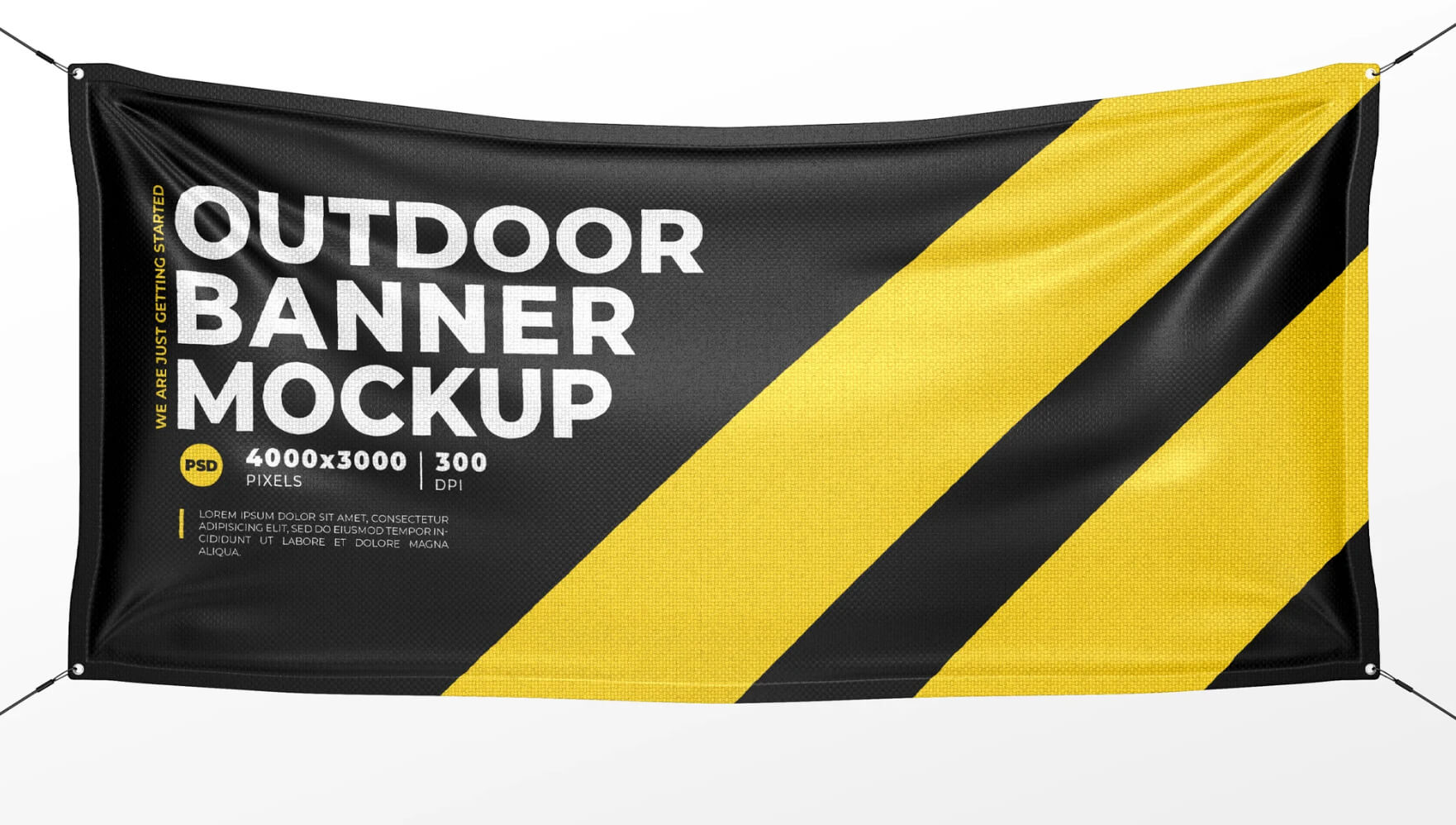
- Retractable Banners vs Static Vinyl Banners. A vinyl banner is just the printed material, no stand included. It has to be hung, taped, or attached to something. Vinyl banners work well outdoors or for longer-term placement, while retractable banners are built for repeated setup and teardown.
For most indoor, repeat-use situations, having the stand and graphic built into one unit makes the retractable banner the better choice.
What to Look for in Quality
Not all retractable banners hold up the same way, and the differences show up over time.
The stand is often where quality stands out most. A well-built base retracts smoothly, the pole feels sturdy, and the feet keep the whole thing stable. Cheaper stands can feel wobbly or start having trouble retracting after repeated use.
Graphic material affects both look and durability. Most retractable banner graphics print on a vinyl or polyester material made to resist curling and creasing from being rolled up again and again. Lower-quality material tends to develop a curl near the edges over time.
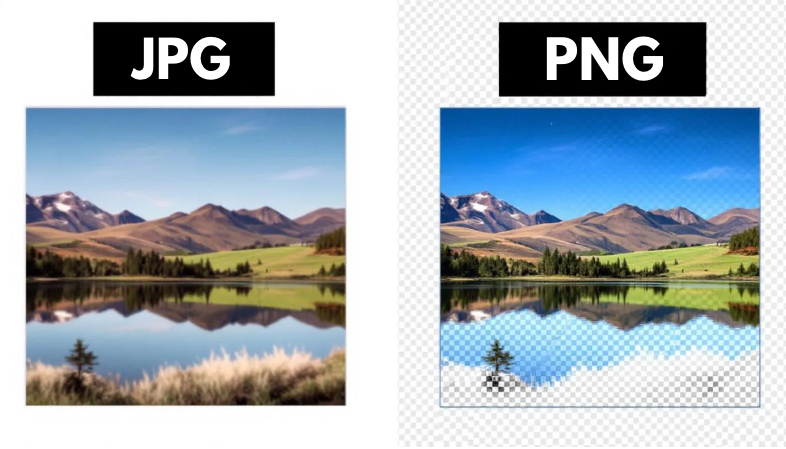
Print quality matters just as much at this scale as it does on a business card, maybe more, since a banner gets viewed from a distance. Resolution and file setup for print-ready files work differently at this size than they do for something small.
A banner printed at the wrong resolution can look sharp up close and blurry from a few feet away, which defeats the purpose entirely. Getting the color mode right matters too, since a banner with shifted or muddy colors loses impact fast.
A quality stand and material will outlast a budget option by years, and that difference becomes obvious after just a few uses.
Indoor vs Outdoor Use
Most retractable banners are built for indoor use, and it's worth knowing why before you plan around one.
Wind is the biggest issue. A standard stand isn't weighted or anchored enough to handle gusts, so it tips over easily outside. The base materials and mechanisms also aren't built to handle rain or humidity over time, which can affect both the stand and how smoothly it retracts.
The graphic material plays a role too. Standard banner material isn't UV-treated the same way outdoor vinyl banners are, so colors can fade faster with direct sun exposure.
If you need something for outdoor use, a static vinyl banner or an outdoor-rated stand with a weighted base is a better fit.
For anything indoors, a retractable banner is built exactly for the job. For anything outdoors, it's worth choosing a format made to handle the elements such as vinyl banners.
The Bottom Line
A retractable banner earns its place in so many settings because it solves a simple problem. It needs to look good, set up fast, and survive being packed away and pulled out again and again.
The mechanics are straightforward, but the quality of the stand and the graphic make all the difference in how long it lasts and how good it looks every time it goes up.
Whether it's for a trade show booth, a storefront, or a real estate open house, a well-made banner pays for itself in how often it gets used.
If you're not sure which size or stand is right for your space, Print Cartel can help you sort through the options and find the banner that fits the job.
Retractable Banners Frequently Asked Questions
How Long Do Retractable Banners Last?
A well-made retractable banner can last for years with regular use, especially with a good stand and graphic material. The material resists curling and creasing from repeated retraction, though heavy daily use wears down any stand faster than occasional use.
Can Retractable Banners Be Used Outdoors?
Most are built for indoor use. The stand and graphic aren't designed to handle wind, rain, or direct sun. For outdoor signage, a static vinyl banner or a more rugged outdoor-rated stand is the better call.
How Long Does It Take to Set Up a Retractable Banner?
Less than a minute, usually. The graphic pulls up from the base, the support pole extends and locks into place, and the banner stands on its own. No tools required.
What Size Retractable Banner Should I Get?
A standard width of around 33 inches works for most single-banner situations, like near an entrance or registration table. Larger formats make more sense for trade show booths or spaces that call for more visual presence.